
Turmeric Curcumin Combined with Piperine
Turmeric Curcumin combined with Piperine is a powerful anti-inflammatory and pain supplement. This all natural health aid has numerous benefits including its Antioxidant properties, help with Diabetes Management, Alzheimers health, Arthritis health, Anti-Cancer properties, Cardiac Health, and Neuroprotective properties.
MM Miller
10/15/20258 min read
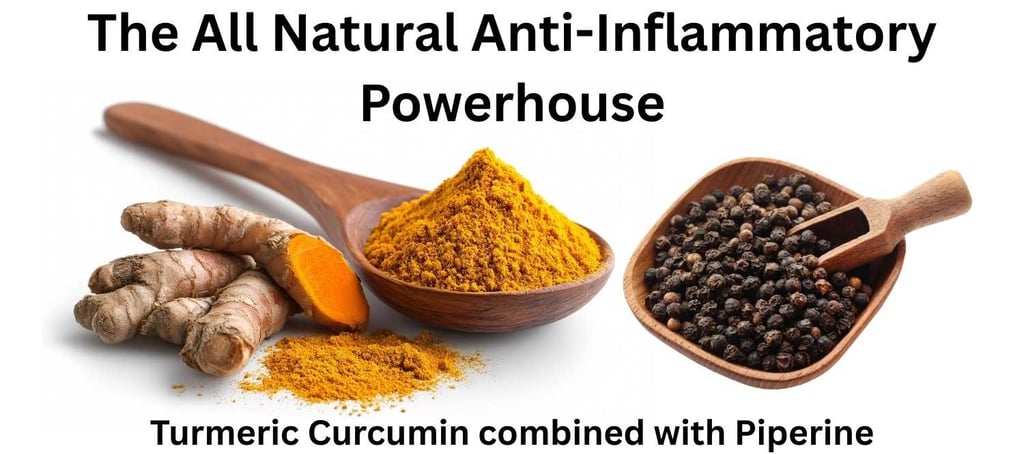
Turmeric is a vibrant golden-yellow spice that is derived from the rhizome of the Curcuma longa plant, which is native to South Asia. It has been a staple in culinary practices across various cultures, particularly in Indian and Southeast Asian cuisine, where it is celebrated for its distinct flavor and color. Beyond its culinary applications, turmeric has a long-standing history in traditional medicine, particularly in Ayurvedic and Chinese practices, where it is utilized for its purported medicinal properties.
The active component of turmeric is curcumin, which constitutes approximately 3-5% of the spice. Curcumin is primarily responsible for the numerous health benefits attributed to turmeric, owing to its powerful anti-inflammatory and antioxidant properties. The chemical structure of curcumin consists of different functional groups, including phenolic and aldehydic groups, which play a significant role in its biological activity. However, despite its promising benefits, curcumin's bioavailability is notably low, meaning that the body does not easily absorb it. This has led to extensive research aimed at enhancing its absorption through various means, including the use of piperine. Research indicates that when combined with piperine, a compound in black pepper, the absorption of curcumin can increase by as much as 2,000%. There are two prevailing theories explaining how this enhancement occurs. Firstly, piperine may facilitate the passage of curcumin through the intestinal wall into the bloodstream. Secondly, it might slow the metabolic breakdown of curcumin in the liver, thereby raising its levels in the blood. Additionally, piperine possesses anti-inflammatory and anti-arthritic properties due to its ability to desensitize a particular pain receptor in the body.
The popularity of turmeric and curcumin has transcended traditional boundaries, leading to their incorporation into dietary supplements and health products worldwide. Recent studies have explored the potential of curcumin in managing a variety of health conditions, including arthritis, cardiovascular diseases, and certain types of cancer. As more research unveils the extent of its health benefits, the understanding of turmeric and its active ingredient, curcumin, continues to evolve, reaffirming their significance in both health and well-being.
The Anti-inflammatory Power of Curcumin
Curcumin, the active compound found in turmeric, has garnered significant attention for its remarkable anti-inflammatory properties. Numerous scientific studies have demonstrated that curcumin effectively mitigates inflammation at the molecular level, making it an important ally in the management of various inflammatory conditions. One of the pivotal mechanisms through which curcumin exerts its anti-inflammatory action is by inhibiting nuclear factor kappa B (NF-kB), a protein complex that plays a crucial role in regulating the immune response and inflammation. Under normal circumstances, NF-kB is kept in the cytoplasm, but when activated, it can lead to increased production of pro-inflammatory cytokines. Curcumin disrupts this process, helping to maintain a balanced inflammatory response.
In addition to targeting NF-kB, curcumin also influences other signaling pathways involved in inflammation. For instance, it has been shown to modulate the activity of inflammatory mediators such as interleukins (ILs) and tumor necrosis factor-alpha (TNF-α). These factors are often upregulated in chronic inflammatory diseases, including rheumatoid arthritis, inflammatory bowel disease, and cardiovascular ailments. By reducing the levels of these inflammatory markers, curcumin may contribute to alleviating symptoms associated with these conditions.
The implications of curcumin's anti-inflammatory properties extend beyond individual health conditions. Chronic inflammation is often referred to as a silent contributor to various diseases, including diabetes and neurodegenerative disorders. As such, incorporating curcumin into one's diet through supplementation or culinary uses may serve as a preventative measure against the development of such conditions. While further research is needed to fully understand its long-term effects and optimal dosages, the evidence supporting curcumin as a valuable anti-inflammatory agent cannot be overlooked.
Curcumin as a Potent Antioxidant
Curcumin, a principal active compound found in turmeric, is widely recognized for its remarkable antioxidant properties. Antioxidants play a vital role in the body by neutralizing free radicals—unstable molecules that can cause oxidative stress and damage to cells. Oxidative stress is linked to various chronic diseases, including cardiovascular diseases, cancer, and neurodegenerative disorders. By combating this stress, curcumin stands out as a promising agent in promoting overall health and preventing disease.
Free radicals are generated through various processes, including metabolism, environmental pollutants, and radiation exposure. When their levels exceed those of antioxidants, oxidative damage occurs, resulting in cell injury and promoting the progression of diseases. Curcumin, with its unique chemical structure, effectively scavenges these free radicals, thereby mitigating their harmful effects. Numerous studies have highlighted curcumin’s capacity to enhance the body’s defense mechanism against oxidative stress.
Research has shown that curcumin can significantly reduce markers of oxidative stress in human and animal studies. For instance, a randomized controlled trial demonstrated that supplementation with curcumin reduced oxidative damage in patients with metabolic syndrome. Furthermore, laboratory studies indicate that curcumin can modulate the expression of several antioxidant enzymes, leading to increased resilience against oxidative injury.
Moreover, the anti-inflammatory properties of curcumin further complement its antioxidant effects. Chronic inflammation often exacerbates oxidative stress, creating a vicious cycle that contributes to disease progression. By addressing both oxidative stress and inflammation, curcumin offers a multi-faceted approach to health maintenance.
This evidence underscores the significance of incorporating curcumin into one’s dietary regimen, whether through turmeric as a spice or in supplement form, to harness its antioxidant capabilities effectively. Continued research will further elucidate the full extent of curcumin’s benefits in combating oxidative stress and promoting long-term health.
Curcumin and Diabetes Management
Curcumin, the active component of turmeric, has garnered considerable interest in the realm of diabetes management due to its potential benefits in regulating blood sugar levels and enhancing insulin sensitivity. Various studies indicate that curcumin may play a pivotal role in mitigating the progression of diabetes and its complications.
Research suggests that curcumin possesses anti-inflammatory and antioxidant properties, which can be beneficial in the context of diabetes. Chronic inflammation is often observed in individuals with diabetes, and curcumin may help alleviate this condition by modulating inflammatory pathways. For instance, a study published in the Journal of Diabetes Research highlighted that curcumin supplementation resulted in a significant decrease in inflammatory markers among diabetic patients, leading to improved metabolic profiles.
Moreover, curcumin may positively influence insulin sensitivity. In an experimental study involving diabetic rats, curcumin administration was linked to an increase in insulin receptor activity, which consequently enhanced glucose uptake by cells. This finding aligns with observations from a clinical trial where participants consuming curcumin experienced notable improvements in fasting blood glucose levels and postprandial glucose responses.
Additionally, incorporating curcumin into one’s diet may aid in reducing the risk of diabetes-related complications, such as cardiovascular diseases and neuropathy. Another study highlighted that curcumin supplementation was associated with better lipid profiles and reduced oxidative stress markers in diabetic subjects. With its multifaceted benefits, curcumin emerges as a promising adjunct in diabetes management strategies.
While further investigations are necessary to fully elucidate curcumin's mechanisms, its potential to support blood sugar control and improve overall health in diabetic individuals is noteworthy. Such evidence positions curcumin not merely as a dietary supplement but also as a valuable ally in the quest for diabetes management.
Alzheimer's Disease and Beta Amyloid Plaque Removal
Alzheimer's disease is a progressive neurological condition characterized by cognitive decline, memory loss, and the formation of beta-amyloid plaques in the brain. These plaques consist of aggregated proteins that disrupt communication between neurons and contribute to neurodegeneration. Recent research has suggested that curcumin, the active component of turmeric, may play a pivotal role in addressing this complex disease through its potential in promoting beta-amyloid plaque removal.
The specific mechanisms by which curcumin impacts Alzheimer’s pathology are multifaceted. Curcumin exhibits antioxidant properties that may mitigate oxidative stress, a key factor involved in neuronal damage associated with Alzheimer’s. Additionally, curcumin has demonstrated the ability to inhibit the aggregation of beta-amyloid proteins, thus paving the way for enhanced clearance of these harmful plaques from the brain. It is postulated that curcumin can enhance the immune response of microglia, the brain’s resident immune cells, allowing for more efficient phagocytosis of beta-amyloid aggregates.
Several studies have bolstered these findings, showcasing the positive effects of curcumin on cognitive function. For instance, research involving animal models of Alzheimer’s has observed significant reductions in plaque accumulation following curcumin treatment, alongside improvements in memory and learning abilities. Human clinical trials have also indicated that curcumin supplementation may lead to improvements in cognitive performance and overall brain health, particularly in older adults at risk for cognitive decline.
In conclusion, curcumin shows great promise as a natural therapeutic agent in the management of Alzheimer's disease, particularly in its ability to promote the removal of beta-amyloid plaques. While further research is necessary to fully understand the extent of curcumin's impact on brain health, its potential benefits warrant attention for those seeking to enhance cognitive vitality and mitigate the risk of Alzheimer's disease.
Arthritis Relief and Curcumin's Joint Benefits
Arthritis is a common inflammatory condition affecting millions worldwide, leading to debilitating pain and diminished quality of life. Curcumin, a natural compound found in turmeric, has emerged as a promising agent in alleviating the symptoms associated with various forms of arthritis, including osteoarthritis and rheumatoid arthritis. Its powerful anti-inflammatory properties are a primary factor in its efficacy for joint relief.
Research has shown that curcumin can significantly reduce inflammatory markers in the body. A study published in the journal "Pain" demonstrated that patients with osteoarthritis who supplemented with curcumin experienced a decrease in pain levels and improved overall joint function compared to a control group. These findings suggest that curcumin's active compounds inhibit the molecules that contribute to the inflammation and pain associated with arthritis.
In addition to pain relief, curcumin may enhance joint health by promoting the regeneration of cartilage tissue. Another investigation highlighted in "The Journal of Medicinal Food" indicated that regular intake of curcumin resulted in increased mobility among participants suffering from rheumatoid arthritis. By improving joint flexibility and reducing stiffness, curcumin serves as a beneficial supplement for individuals managing long-term arthritis symptoms.
Furthermore, multiple case studies and clinical trials point to the potential of curcumin as an adjunct therapy alongside traditional arthritis medications. For instance, a combination of curcumin and conventional treatments led to better outcomes regarding pain relief and functional improvement, suggesting its role in a holistic approach to arthritis management.
As more studies continue to validate the benefits of curcumin, it is essential for those suffering from arthritis to consider incorporating this potent compound into their health regimen. By harnessing curcumin's anti-inflammatory qualities, individuals may find considerable relief and improvement in their joint health, enhancing their overall well-being.
The Anti-cancer Properties of Curcumin
Curcumin, the active compound found in turmeric, has attracted considerable attention in the scientific community for its potential anti-cancer properties. Numerous studies have examined the bioactive effects of curcumin, revealing its ability to affect cancer cell growth, metastasis, and tumor formation. Research suggests that curcumin exerts its anti-cancer effects through several biological mechanisms, including the modulation of multiple signaling pathways and the regulation of gene expression associated with cancer development.
One of the critical ways curcumin influences cancer cell behavior is by inhibiting the activity of oncogenes, which are genes that have the potential to cause cancer when mutated. Additionally, curcumin appears to promote apoptosis, or programmed cell death, in cancer cells while leaving healthy cells unharmed. It is also thought to impede the proliferation of cancer stem cells, a subpopulation of cells responsible for tumor growth and recurrence. This multifaceted approach makes curcumin a compelling candidate for both cancer prevention and treatment.
Clinical trials have provided promising insights into the efficacy of curcumin against various types of cancers, including breast, prostate, colorectal, and pancreatic cancer. For instance, a pilot study indicated that curcumin supplementation may reduce tumor markers and improve the overall quality of life for patients undergoing treatment for breast cancer. Furthermore, preclinical studies have demonstrated that curcumin can inhibit the invasion and metastasis of cancer cells in animal models.
Researchers are exploring various formulations and delivery systems to enhance curcumin absorption and effectiveness. Overall, the compelling evidence surrounding curcumin's anti-cancer properties underscores the need for continued research to fully understand its role in cancer prevention and treatment.
Cardiac Benefits
Turmeric curcumin's benefits extend to cardiovascular health as well. Curcumin's anti-inflammatory and antioxidant properties contribute to the reduction of heart disease risk factors by improving endothelial function and reducing arterial plaque buildup. Additionally, curcumin has been shown to reduce LDL cholesterol levels and improve blood pressure regulation, making it a valuable ally in maintaining heart health.
Neuroprotective Benefits
(Brain Health)
The neuroprotective properties of curcumin may help in the preservation of brain health as one ages. Studies suggest that curcumin can protect against age-related cognitive decline and neurodegenerative diseases. Its ability to promote neurogenesis (the growth of new neurons) and combat neuroinflammation makes it a promising candidate for maintaining cognitive function in aging populations.
In Conclusion
In summary, turmeric curcumin combined with piperine, are not just spices, but potent bioactive compounds with far-reaching health benefits. This duo represents a remarkable natural remedy. With ongoing research continuing to unveil its many benefits, curcumin may become an essential part of a healthy lifestyle, particularly for aging populations grappling with muscle and joint pain. As with any supplement, it is advisable to consult with a healthcare provider before starting curcumin to understand its potential interactions with existing medications.